Hands-on technology transfer. No consultants.

Pharma Technology
implement transfer securely
from gap assessment to successful validation

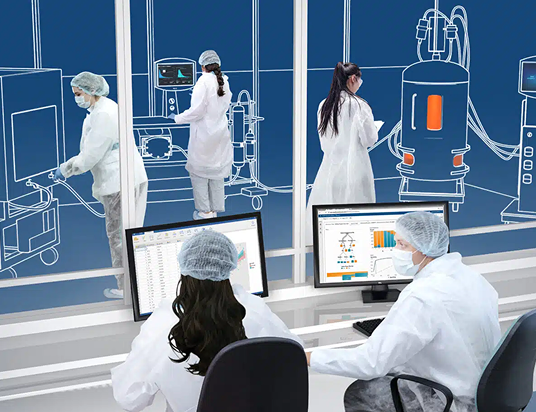
We plan and implement production transfers, technology transfers, and analytical method transfers to CMOs, CDMOs, or other sites. Our QA, MSAT, and manufacturing experts handle gap assessments, process adaptation, transfer planning, and success monitoring – with minimal dossier changes and controlled GMP risk.

Technology transfer; production transfer; analytical transfer

Technology transfer

7 Method Transfers
for technology transfer
Iron

What we do:

Supply chain performance is defined and continuously measured. We do not measure with a multitude of KPIs, but prefer meaningful metrics.

Our improvements are measurable, verifiable, and presentable.

Pharma Technology Transfer

7 Method Transfers
for technology transfer
Iron

What we do:

7 Method Transfer Technology Transfer

Technology
transfer

What we do:

MORE

We ensure that your production transfer and technology transfer are successfully carried out.

We handle the technological adaptations at the new production site ourselves and design your technology transfer so that dossier changes are kept to a minimum. This is how we ensure a fast and risk-minimized production start for you after successful validation.
At the same time, we are actively bringing the manufacturing process up to the latest regulatory standards and efficiently optimizing the production workflow.

In addition, we’ll handle the transfer of your analytical methods to the new service provider—expertly, with a practical approach, and with a full focus on GMP compliance and staying within budget.

As experienced QA, MSAT, and manufacturing experts, we provide hands-on support to your team and ensure that your projects are completed on time, cost-effectively, and with minimal GMP risk—we are not a consulting firm, but your trusted implementation partner.

Technology Transfer in Biotechnology

More strength together

We'll transfer your methods and technologies to your new supplier or service provider.

We'll transfer your methods and technologies to your new supplier or service provider.

Gap assessment and risk analysis

We compare the two manufacturing sites or laboratories in terms of equipment, expertise, and past experience. You will receive a detailed overview of the key differences and whether there are any risky steps in the manufacturing process or risky analytical methods.

Planning and Testing

Based on the existing risk assessment, we will analyze which processes and methods require specialized training and which acceptance criteria can be established. We will incorporate any additional necessary tests into the overall plan and develop a realistic timeline.

Implementation and Performance Monitoring

All planned tests are documented and evaluated after they are conducted.

Comparison with the met acceptance criteria ensures that the technologies and methods have been successfully transferred. As a result, you obtain two equivalent laboratories and equivalent, validated production sites.

We are not "just consultants"! We plan and implement.

We’ve already made our mistakes. We’ll spare you—and ourselves—from repeating them. All team members are seasoned managers with many years of experience in manufacturing, supply chain, quality, and regulatory affairs. We know firsthand what it’s like to face cost pressures and the pressure to deliver results.

Implementation of technology transfer projects; from gap analysis to validation;
Contact section image

1. Gap Assessment and Risk Analysis

For a production transfer, we are actively searching for and evaluating several potential contract manufacturing organizations (CMOs) and conducting a targeted technological gap analysis.
In doing so, we precisely analyze how well a contract manufacturer fits the specific requirements of your product – such as batch size, special equipment, or manufacturing authorizations like narcotics.

We evaluate the production process in the dossier and make an informed decision as to whether transferring production to a specific contract manufacturer is advisable and feasible.

As soon as technical feasibility is established, we conduct a detailed risk analysis to identify the most important GMP-related risk factors at an early stage and address them in a targeted manner (particularly in the case of technological adjustments and changes to the dossier). This is a dynamic assessment that we continuously refine and implement throughout the transfer and detailed planning process.

Our team of experienced QA, MSAT, and manufacturing experts acts as an extension of your company—we’re not just a consulting firm; we take a pragmatic, hands-on approach to implementation. However, we only supplement your team where additional support is needed. This keeps teams small and agile and keeps costs under control.

We include all relevant areas in our assessment: external laboratories, suppliers of medical devices and raw materials, contract packaging, warehousing, and the entire logistics chain.

This is how we ensure an optimal balance between budget and GMP compliance.
Our risk analysis allows you to realistically assess whether the production transfer is feasible or whether complex measures, such as renovations or investments, will be necessary.

In doing so, we keep an eye on costs and timeframes and manage the process to implement your projects on schedule and with minimal GMP risk.

Technology Transfer in Biotechnology

2. Planning and Accompanying Experiments and Tests

Technology transfers are relatively complex projects because they always involve multiple departments within a company—and, in some cases, multiple companies as well.

Every company has its own structures and ways of thinking, which aren’t always fully compatible. This is often referred to as “cultural differences”—but people often overlook just how important these differences really are! We speak 9 languages at our company, so we’re already familiar with quite a few cultural differences from our daily lives.
When planning the transfer, it is very important to first establish a shared understanding. We begin by defining the common goal, success criteria, and key steps, and then we move on to the details.

We try to support decisions as best as possible with data. This approach pays off very well financially during subsequent implementation.

 It is rarely possible to implement a production process one-to-one. Adjustments in the production process are usually necessary. These adjustments are often due to the different types of systems. 

However, certain desired changes in the production process (for example, flexibility in batch sizes, flexibility in production equipment, etc.) can also occur. Here, too, necessary technical adjustments are required. We obtain our data through carefully planned laboratory experiments or pilot plant tests. This saves us from very cost-intensive technical trials („technical batches“).

In recent years, this has been summarized under the term “AI”. We tend to use more specific terms such as experimental design, multivariate analysis, simulation, etc.

A few years ago, that was still commonly known by the term chemometrics.

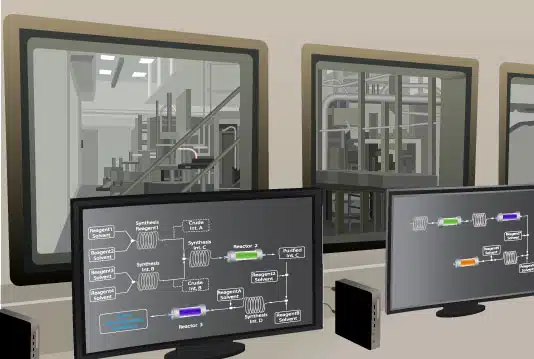
Using the data obtained, we generate simulation models, enabling us to make reliable predictions for the technical implementation. You thus also comply with „Quality by Design“ requirements and are even more flexible when making subsequent process changes.

Section image 1

3. Implementation and Monitoring of Success

We usually carry out the production itself and its success control during process validation. There, there is another opportunity to review and adjust the initial risk assessment in the first step of the risk analysis. Parameter ranges that can significantly influence process flexibility are tested during validation.
 
In addition to manufacturing, all affected parts of the supply chain must also be controlled. This includes analyses in external laboratories (for example, release or microbiological controls), contract packaging, the supply chain, and storage (for example, cold storage). Only when the entirety has been checked and also validated with stability samples do we consider a transfer successful. Our performance monitoring therefore goes beyond a normal validation batch.

Contact section image

Contact one of our experts to discuss your challenge.

What's in it for you as a decision-maker?

We relieve you and your core team for specific projects. We contribute „hands-on experience“ from seasoned managers. We organize your projects as „low risk“ GMP projects, with maximum speed and within the budget framework. You minimize regulatory risks and have clear responsibilities along with a transparent organization. You have a highly experienced project team with high technological competence. We are 7 experienced practitioners (QA, QC, QM, Manufacturing, Data Science, R&D, Supply Chain) with additional FTEs – depending on the project scope (FTEs from 10 to approx. 40).

WHO Definition Technology Transfer

WHO Definition Technology Transfer

Transfer of technology is defined as “a logical procedure that controls the transfer of any process together with its documentation and professional expertise between development and manufacture or between manufacture sites”

Practice links image

Show us the challenges of your transfer project

Have swift implementation checked